


Hi there. This is forms & contents, a newsletter about ideas, culture and history told through the lens of Georgian wine.
My name is Victor. My goal with this newsletter is to help you experience Georgian wine in a way that goes beyond what’s in the glass and beyond the usual sales pitch about ‘the birthplace of wine’ and ‘8,000 years of winemaking tradition’. I want to share the characters, stories and ideas that bring my country’s wine culture to life, and to introduce you to cool producers, lesser known appellations, and rare grape varieties along the way.
I’ll also be testing a humble suspicion of mine: that amid a generational shift in how Britain and America consume alcohol, with people drinking less but looking for more meaning in what they do drink, Georgian wine culture might be exactly what many are searching for.
I hope you’ll stick around for all of it.
Tastings past and present
Couple weeks ago I teamed up with my friend Dato Berulashvili to host a joint tasting event at Saperavi Social, his dedicated Georgian wine bar and restaurant in Islington, London. This was the second instalment in what I hope will become a series of narrative-driven tasting events, which I’ll then try to amplify to a bigger audience through this newsletter.
Dato and I did our first tasting collaboration back in July. It featured 11 Georgian wines and a moderated panel discussion with wine people like Doug Wregg of Les Caves de Pyrene and Paul McSharry of Maze Drinks.
That tasting even made it into Jancis Robinson’s Financial Times feature ‘The clay, the grapes and the politics of Georgian wine’
You can read the full summary—plus general background on Georgian wine and recommendations about its market positioning—here 👇
Georgia: Wine Tasting, Narrative Testing
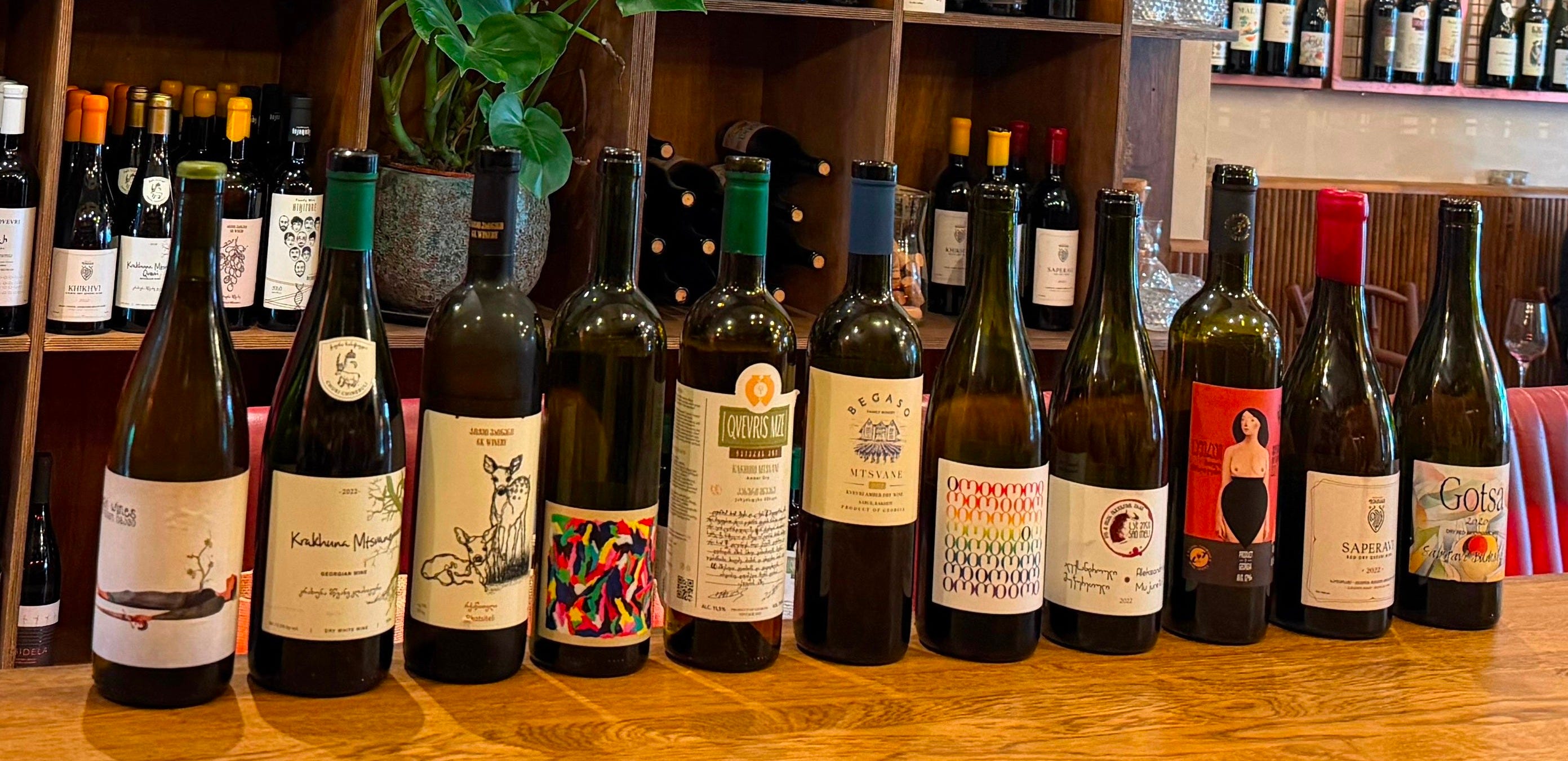
For our latest tasting on 14 October, Dato and I decided to explore the diversity, character and personalities of Georgia’s winemaking regions through their native grape varieties.
Our tasting guide for the afternoon was Kaha Baindurashvili, owner and head winemaker at the acclaimed Kardanakhi Estate, his family winery in Kakheti that dates back to 1886. Kaha also happened to be the Minister of Finance of Georgia between 2009 and 2011, a fact he deems irrelevant to any wine-related context but I still felt like mentioning it here as a credential.
I’m usually conflicted about wine tastings and the kind of chat they produce. That is, pedantic wine chat. Sometimes mind-numbing and other times sleep-inducing. As much as Georgians care about wine, we never talk about wine for its own sake. We just talk, and the wine is there. To accompany. To facilitate. To decorate. To serve as both the social glue and the ferryman who carries you away from the oppressive shores of sobriety.
In Georgia, wine is indispensable but never central. If you’re at a dinner table in Georgia and find yourself extensively talking about wine—tasting notes, cross-examinations and production technicalities—that is a sign of serious social malfunctioning.
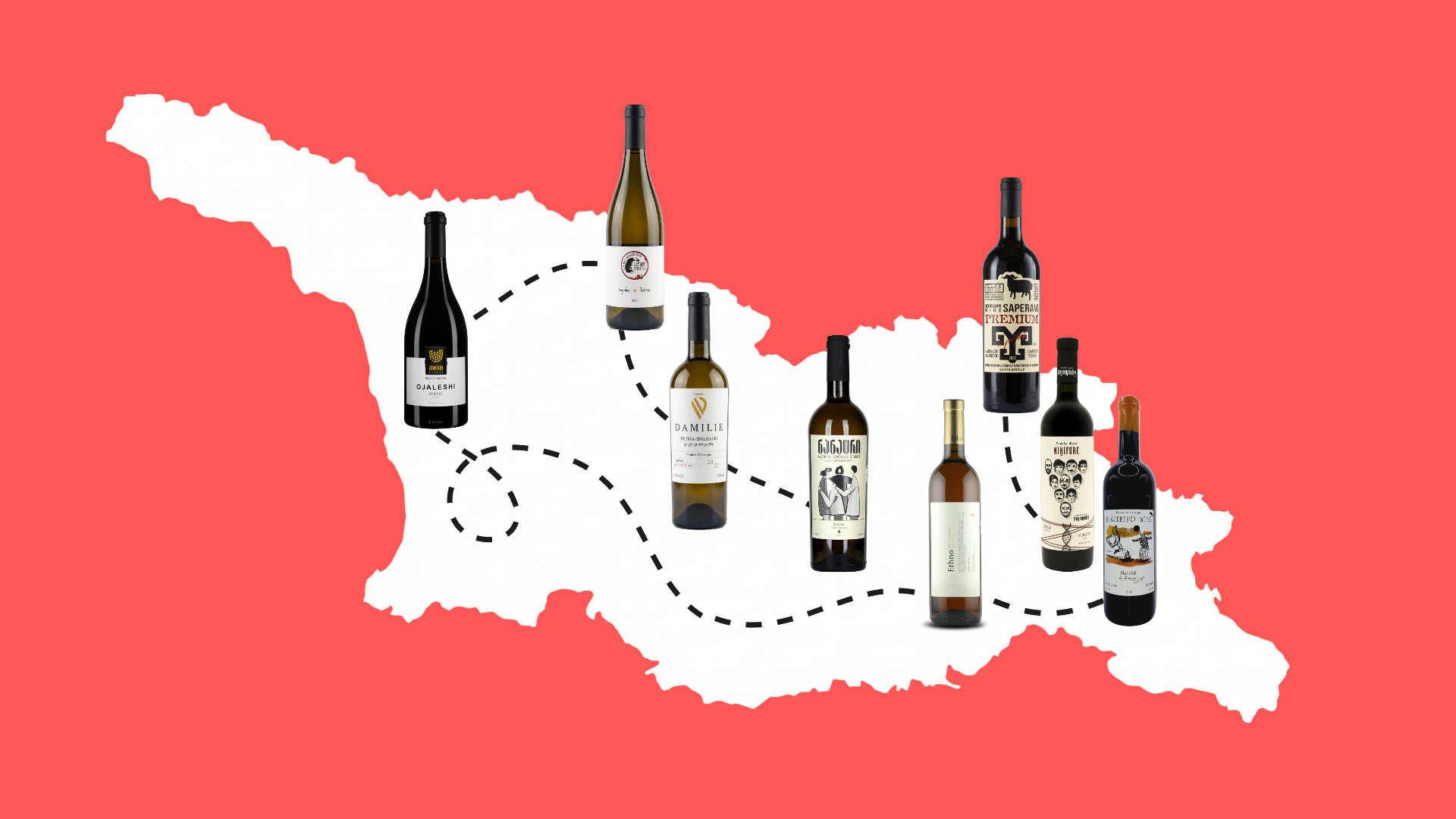
I think we should treat wine like we would a beautiful, hand-crafted door. The space the door opens is much more interesting than the door itself, no matter how special the wood or how skilled the door maker. With this in mind, the intention of our ‘Regions’ tasting was to present eight wines that would open the door to experiencing the character and personality of five Georgian regions: Kartli, Imereti, Racha, Samegrelo and Kakheti.
What follows is an attempt to do so in writing, too. The tasting notes are credited to Kaha Baindurashvili, whom I will be paraphrasing.
Now let’s get to the drinking.
Kartli
Nanatri Chinuri 2022, White dry, Chinuri 100%, Qvevri, ABV 12%
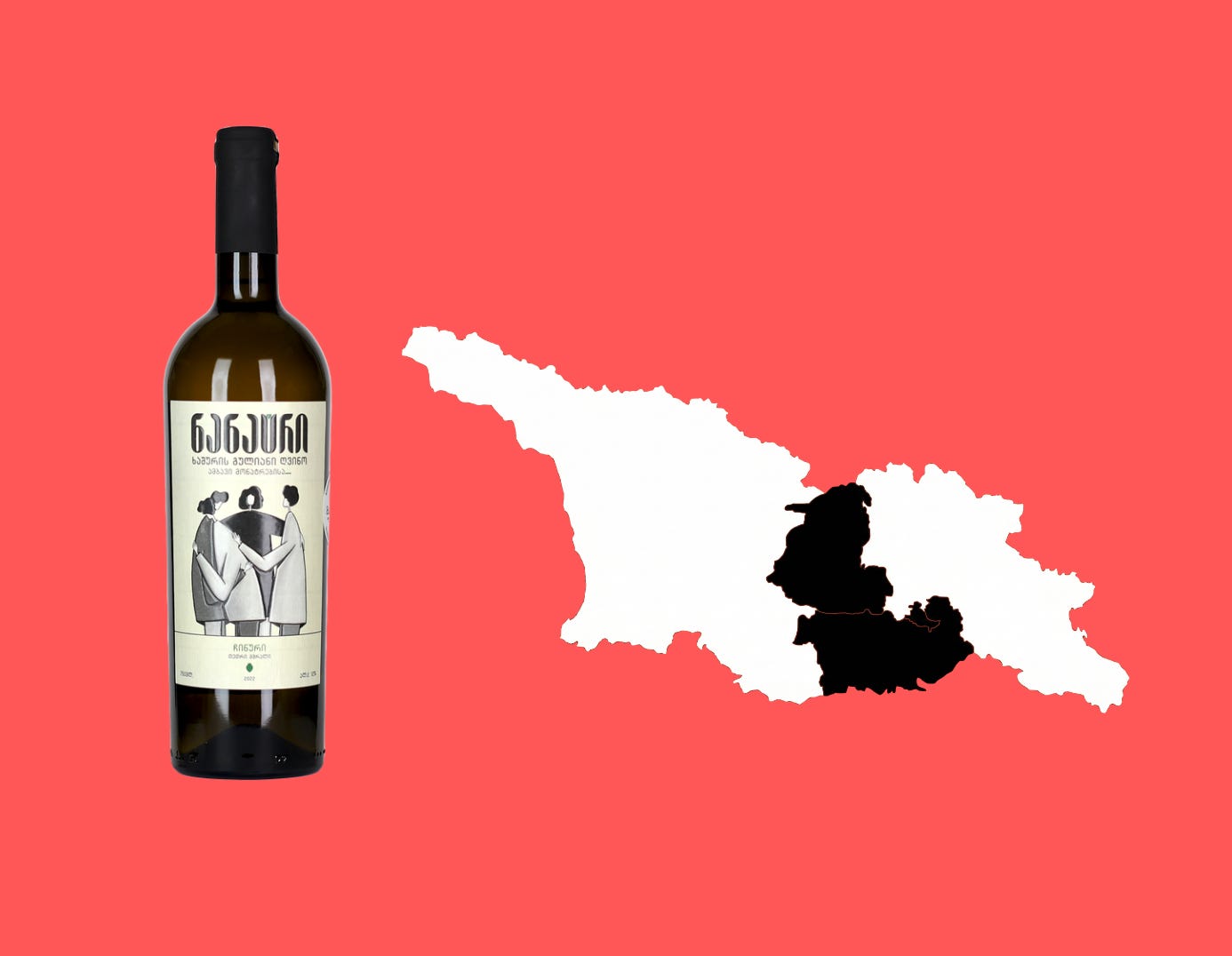
Kartli is the natural place to start this sort of tasting. It is the historical core of Georgia. The Georgian name for the country, Sakartvelo, comes from Kartli and means ‘land of the Kartvelians’. The capital city, Tbilisi, is also located here, although it’s a separate administrative unit. Kartli is split between north (Shida Kartli) and south (Kvemo Kartli) and about half of Georgia’s 3.9 million population lives here. It is where most people land when they visit or return home.
(As of the 2008 Russo-Georgian War, a large part of Shida Kartli, also known as historic Samachablo, remains under Russian occupation with the name ‘South Ossetia’. Georgians are barred from entering.)
By any measure, Kartli is the Georgian standard: the mean, the norm, the meaty middle of the distribution curve. The quirks of every other region are judged against the Kartlian baseline. So you never really hear jokes about people from Kartli. Which, in a country that runs on regional teasing, is its own kind of jab.
The climate is dry and mild, with four distinct seasons and not many extremes. Just some basic good weather, mate. An all-around nice place for grapes to thrive.
Our first wine comes from Nanatri winery in the village of Kvishkheti outside the town of Khashuri, which sits at the eastern base of the Likhi Range that splits Georgia into East and West—smack dab in the centre of the country.
The word nanatri means ‘longed-for’, ‘long-awaited’ or something that’s been deeply missed. And, appropriately, the winery’s take on Chinuri did indeed evoke nostalgia in me.
Chinuri derives from the Georgian word chinebuli, which means ‘excellent’ or ‘noble’. It was among the main grapes utilised as the base for ‘Soviet Champagne’ (Sovetskoye Shampanskoye), and it is still the main variety used in Georgian sparkling wine. New Year’s, birthdays, weddings: suckling pig and Bagrationi Classic Brut. Everybody knew the taste, but very few could have told you it came from the Chinuri grape.
Although an increasing number of producers are expressing Chinuri as dry and still, the taste nevertheless calls back to memories of sparkling wine served during bygone celebrations. Nanatri’s label depicting family members embracing each other makes the point visually as well.
Fermented underground in traditional qvevri clay vessels, this Chinuri is straw yellow edging towards light gold. The nose has field flowers and ripe pear, with a mint-like herbal note running through. On the palate it is dry and medium-bodied with vibrant acidity, and the fruit is held back, leading to a quiet finish. A European drinker might think of Aligoté or a good Soave.
For me, it just tastes like coming home.
Imereti
Damilie Tsitska-Tsolikauri 2023, White dry, Tsitska 50% Tsolikauri 50%, Qvevri, ABV 11.5%
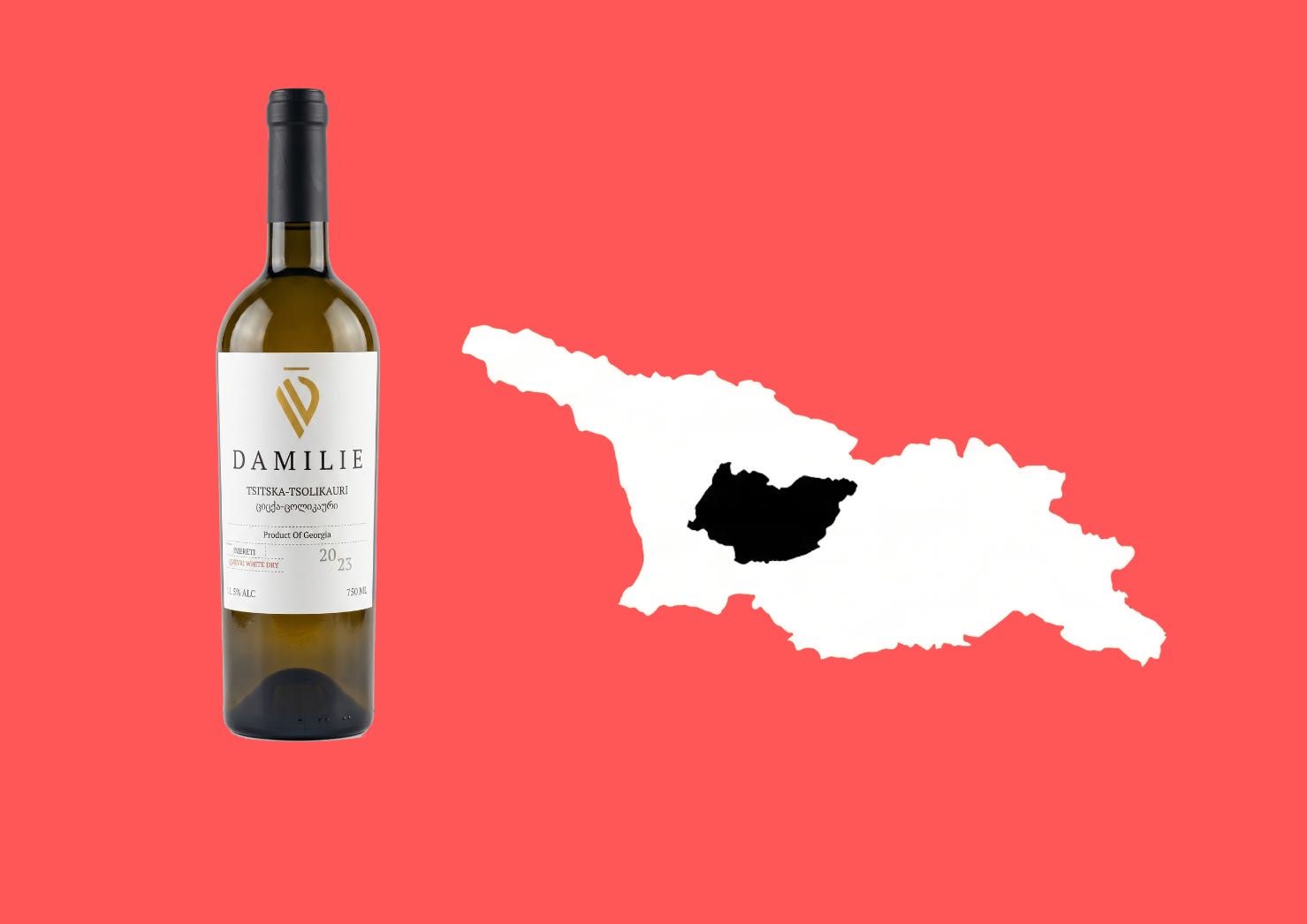
West of Kartli, past the Likhi range that splits Georgia in two, the country gets greener, wetter and noticeably chattier. Imereti is the heart of western Georgia. Its people have a reputation for being communicative, expressive, sharp-tongued, snarky, and a bit rough and tumble. Appropriately, Imereti’s capital Kutaisi is known for its artists, its underground hip-hop scene, a notorious thief-in-law culture, and absurd street jokes about everyday situations, like the one where so many mourners turned up to a funeral that host felt obligated to add another deceased.
Like the rest of Georgia, Imeretians also like to party and keep a feast going for hours.
In winemaking, Imeretians also use qvevri, but with a lighter hand compared to heartier Kakhetian ambers. Skins and stems play a smaller part, and the wines come out brighter and leaner. You are not meant to overthink Imeretian wine. It is made for parties and prolonged drinking sessions rather than contemplation.
Our second wine comfortably sits in this category. It comes from the town of Chiatura and the winery Damilie (pronounced ‘Da-mi-li-eh’), which translates to ‘drink this for me’ or ‘you drank mine’, depending on tense. It’s a kind of toast, a cheeky dare, a generous invitation and a petty accusation all in one, which is very Imereti.
The blend is the classic Imeretian pairing: Tsitska brings high, nervy acidity and Tsolikauri brings body. (Readers of the July piece may compare this to Natia Chekhurishvili’s White Mulberry Tsitska 2024).
Partial skin maceration in qvevri gives the wine a pale gold colour verging on light amber. The nose has green apple, quince and dried chamomile, with a waxy, honeyed note and a twist of citrus peel. It’s dry and textured on the palate, with lively acidity, a gentle tannic grip and a clean, mineral finish. Think of a Grüner Veltliner with some texture, or a skin-contact Pinot Gris from Alsace.
This Tsitska-Tsolikauri is playful and doesn’t take itself too seriously. It’s good company for a long, lively feast, which is exactly what it was made for.
Racha
Sad Meli Winery Tetra 2024, White dry, Tetra 100%, Qvevri, ABV 12%
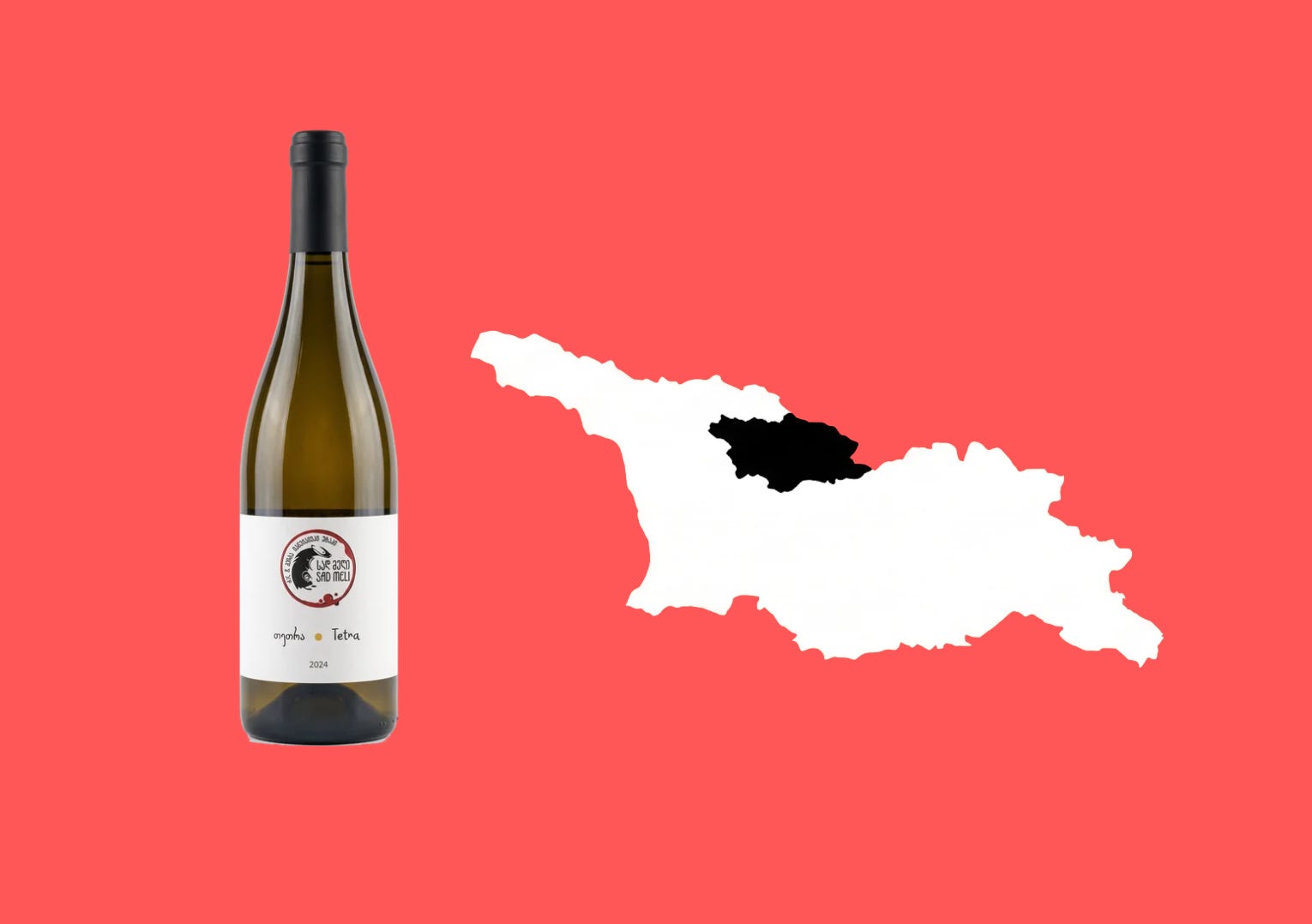
North of Imereti the land climbs into the Greater Caucasus, and the pace of life slows down considerably.
Racha is a small mountain region of breathtaking valleys, cool nights and a population famous across Georgia for being unhurried. There’s a joke about a Rachan man who took his pet turtle for a walk and the turtle got away from him.
There’s another where a man is walking through a forest in Racha when he's suddenly surrounded by armed men. Their commander steps forward and asks, "Are you a German?"
"No, I’m Megrelian," says the man. "Who are you?"
“We're the Rachan partisan battalion."
(Nobody had told them the Second World War was over.)
The flip side of all that slowness is a character that’s stoic, conscientious and patient. Things are done carefully and properly, with no desire to be flashy or show off. And Sad Meli Winery’s Tetra embodies this character perfectly. Even the grape’s name is unpretentious: Tetra comes from tetri, the Georgian word for ‘white’. And their label carries the same quiet confidence.
Everything about this wine demonstrates patience and steadiness. The vines are 60 years old and grow at an altitude of 800 metres. Fermentation uses wild yeast in qvevri, followed by six weeks on skins and six months of ageing. It is unfiltered, and only 300 bottles were made. You can really taste the care that went into it.
Its colour is yellow to pale gold, lightly hazy. The nose opens with linden blossom and a honey-like perfume over delicate white fruit. The palate is gentle at first, then the maceration shows itself in a fine, drying grip, and the finish is rich, long and stony. An Alsace Pinot Blanc with light skin contact is the nearest European comparison, but the minerality is pure mountain.
Racha is better known for its reds, above all Khvanchkara, a semi-sweet blend of Aleksandrouli and Mujuretuli. Sad Meli’s dry qvevri version of that blend (2022 vintage) was one of the favourites at our first tasting (see Jancis Robinson’s recommendations in the FT).
Winemaker and chef Beka Kereselidze, whose family owns Sad Meli, also runs a restaurant of the same name at the Royal Docks in East London. Without exaggeration, it serves some of the best Georgian food I’ve had outside of home. Keep an eye out for their second location, opening soon in Fitzrovia.
Kakheti (Ambers)
Ethno Wines Khikhvi-Mtsvane 2024, Amber dry, Khikhvi 60% Mtsvane 40%, Qvevri, ABV 14%
Blackbird Wine (Kardanakhi Estate) Rkatsiteli 2021, Amber dry, Rkatsiteli 100%, Qvevri + Oak, ABV 13%
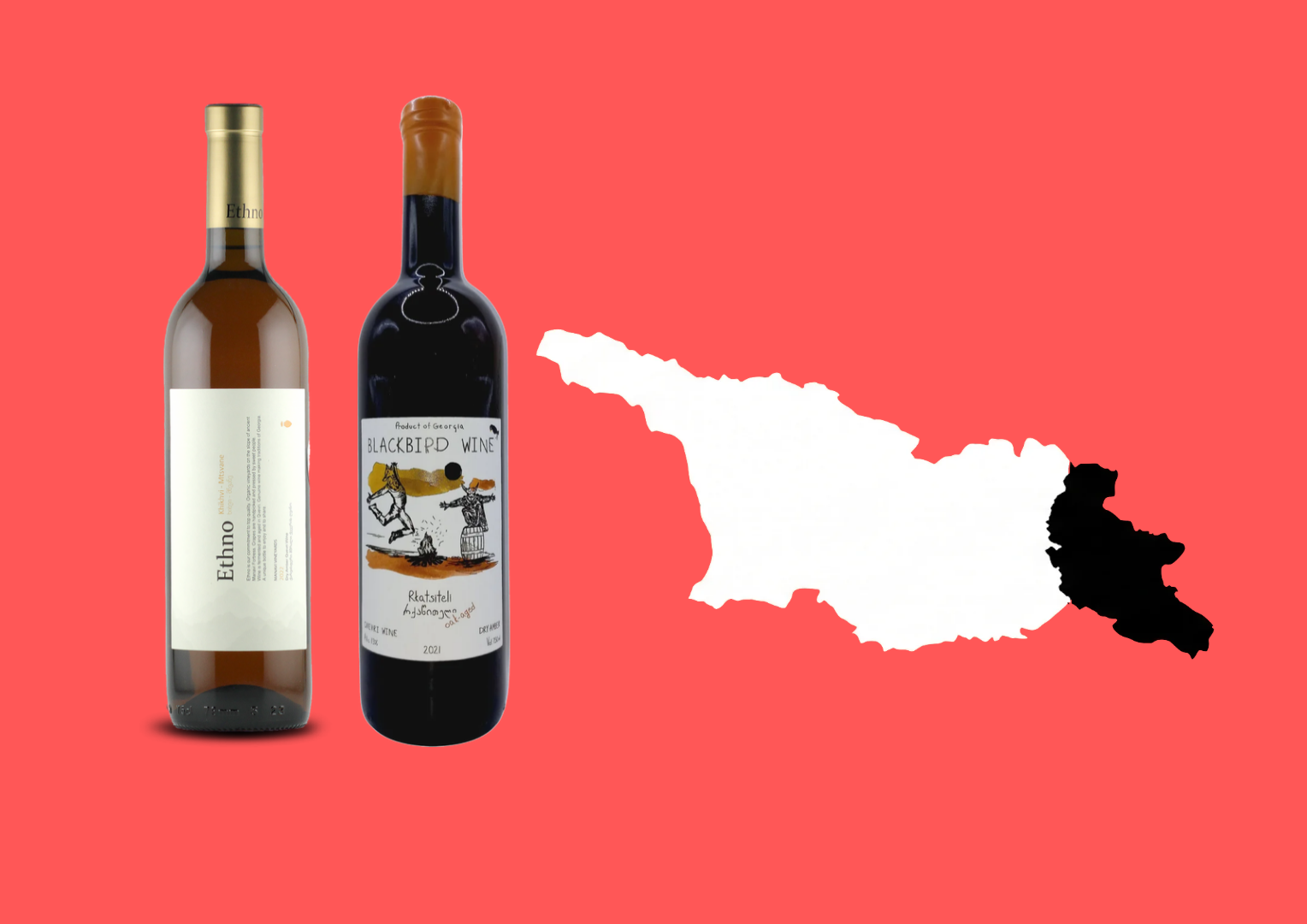
The far east of the country is where most Georgian wine is made, and where most of the world’s idea of Georgian wine comes from. The Alazani valley is hot, fertile and lined with vineyards, and almost every family has a qvevri buried somewhere.
If Kartli is the Georgian norm, Kakheti is the Georgian archetype. This is the land of the supra, the long, ritualised feast led by a tamada (toastmaster). Kakhetians are known for their warmth and generosity, sense of humour, for being stubborn and hard-headed, and for treasuring the simple things in life.
One joke tells of a Kakhetian man on his deathbed who offers his three sons a choice: a share of his fortune or a piece of his wisdom. The eldest and middle sons take the money. The youngest, who loves his father dearly, asks for the advice. The father beckons him close and whispers: ‘At my wake, when they bring out the khashlama, make sure you take the piece with the bone in it.’
(Khashlama is meat slow-boiled with herbs and a Kakhetian feast staple. The bone-in piece is the best one.)
Kakhetians are also very resilient: the region survived many Persian and Turkic military campaigns over the centuries as well as devastations from Soviet collectivisation in the 20th. Of course, the resilience is embodied in its winemaking.
The traditional Kakhetian method leaves the juice on its skins, and often its stems, in qvevri for months. That produces the hearty amber wines that put Georgia on the international map. Our two wines offer two different visions of what Kakhetian amber is and can be.
The first is a 60-40 bled of Khikhvi and Mtsvane from Ethno Wines in the village of Manavi. These two Kakhetian natives are fermented and aged in qvevri with wild yeast, with nothing else added to the story. Khikhvi is an ancient grape that brings ripe yellow fruit and Mtsvane brings floral lift. It’s deep gold moving towards amber, with apricot, peach, flowers and citrus peel, and nutty notes developing in the glass. It’s dry and balanced, with a polished tannic grip and a long finish. Think of skin-contact Friulano or Ribolla Gialla from Friuli or Brda.
It’s pure heritage, and nothing about it is trying to be anything else.
The second amber belongs to our guide. Kaha’s family cellar in Kardanakhi dates to 1886, and century-old qvevri are still in use there. He bottles under the Blackbird Wine label, and his grape is Rkatsiteli, Georgia’s most widely planted white and, during Soviet times, among the most planted grapes in the world. It spends six months on its skins in qvevri, then six months in Caucasian oak, which adds a European accent. That’s a Kakhetian habit too, going back to the 19th century, when Alexander Chavchavadze began making European-style bottled wine at nearby Tsinandali, another protected geographic designation.
It’s deep amber with copper glints. The nose has peach jam, white mulberry and wild plum, with warm spice and a touch of vanilla. The palate is dry and textured, with rounded tannins and savoury notes from five years of development. Think of a mature, oak-aged skin-contact Ribolla Gialla.
Blackbird's label is distinctive too. It shows a drawing of an ancient, pre-Christian Georgian folk ritual known as Chiakokonoba, in which villagers light a bonfire and take turns leaping over it, a ceremony meant to expel evil spirits.
We’ll return to Kakheti again shortly.
Samegrelo
Binekhi Winery Ojaleshi 2024, Red dry, Ojaleshi 100%, Qvevri + Oak, ABV 13.5%
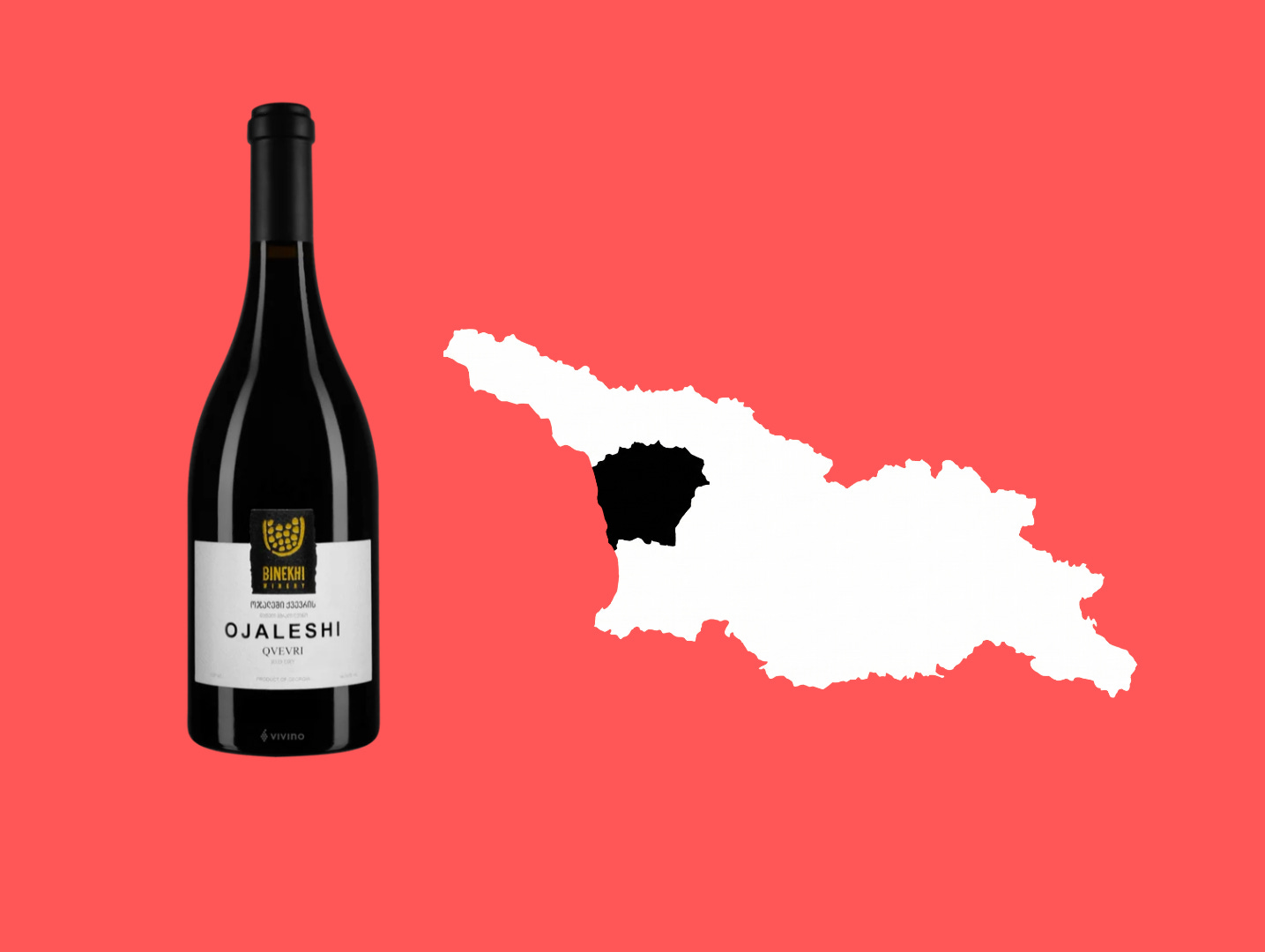
Before moving to the Kakhetian reds, we made one more detour west, all the way to the Black Sea.
Samegrelo is humid, subtropical and fiercely itself. Megrelians have their own language, which is not mutually intelligible with standard Georgian, and their own distinct cuisine, the most extravagant and spiciest in the country. They also have a reputation for fiery personalities, ambition, cleverness and a knack for business and politics, which other regions often read as trickery or deceptiveness. The “Megrelian con artist” is one of the best-known tropes in Georgia.
Historically, Samegrelo was the wealthiest part of the country. It forms the core of ancient Colchis, the kingdom of Greek myth from where Jason stole the Golden Fleece. From the Middle Ages until the 19th century it was ruled by the Dadiani dynasty, known for their luxurious palaces and their close ties to European aristocracy. In Soviet times the region enjoyed extra privileges thanks to high-ranking Megrelians in the Communist Party apparatus in Moscow. Today, many internationally recognisable Georgians carry Megrelian surnames (the giveaway is the -ia, -ua and -ava ending). They include x2 UEFA Champions League winner Khvicha Kvaratskhelia, x2 UFC champion Ilia Topuria, x2 NBA champion Zaza Pachulia, singer-songwriter Katie Melua, and ex-Balenciaga and now Gucci creative director Demna Gvasalia.
A history like that tends to give people a high opinion of themselves. Megrelians have a bit of a superiority complex and are not too shy to claim that they are the most talented people in Georgia. (Being of Megrelian origin myself, I have to admit my ego does need checking now and then.)
It would only make sense for the region’s signature grape to share this same temperament.
Ojaleshi is one of Georgia’s rarer native varieties. It was traditionally grown up trees rather than on low trellises, climbing so high into the canopy that harvesters needed ladders to reach it. It’s a late ripener that takes its time and expects to be looked up to.
Binekhi Winery’s version is first fermented in qvevri and then aged in oak barrels. It’s deep purple with a violet rim. The nose is full of forest berries, especially blackberry, raspberry and cherry, with a real crack of black pepper. On the palate it’s dry, with fresh acidity and distinctly drying tannins, and the oak sits neatly underneath. If you like Northern Rhône Syrah or Blaufränkisch, this is your way in.
This Ojaleshi has ambition, richness and spice. It’s noble and it knows it.
Kakheti (Reds)
Nikifore Mukuzani 2021, Red dry, Saperavi 100%, Stainless steel + Oak, ABV 15%
Koncho & Co. Saperavi Premium 2022, Red dry, Saperavi 100%, Stainless steel tanks, ABV 13.5%
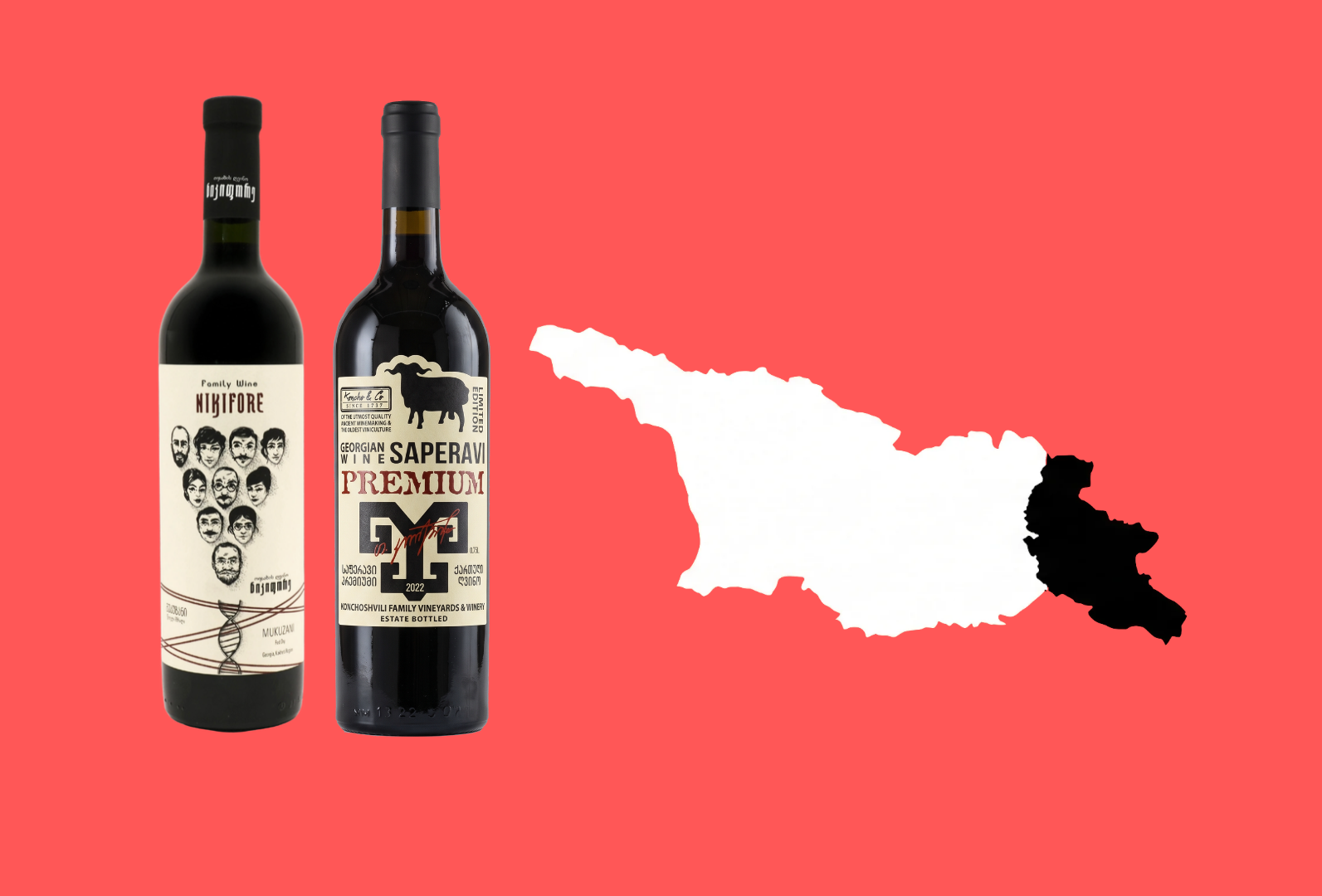
We end the tasting back in Kakheti, with Saperavi, Georgia’s most widely planted red. If you’ve had one Georgian red, odds are it was this one.
It’s one of the few grapes in the world with red flesh as well as red skin. The name means something like ‘colouring dye’. In July we argued that Saperavi could do for Georgia what Malbec did for Argentina, giving the market one memorable grape to grab onto before it discovers everything else. These two bottles make that case from opposite banks of the Alazani.
On the right bank, Mukuzani is Georgia’s most respected PDO for red wine, which requires the use of 100% Saperavi grapes from the Mukuzani micro-zone (elevation between 350 and 750) that are to be aged for at least two years, one of which must be in oak barrels.
Nikifore ferments on the skins in stainless steel followed by oak aging. At 15% ABV, it brings the heat yet remains velvety, but it would be well served by further aging to round out further. It’s deep ruby to purple, with blackcurrant, liquorice, clove and dried flowers on the nose. The palate is dry and structured, with integrated tannins and a coffee note on the finish. Fans of Cahors Malbec will feel at home.
Across the valley, at the foot of the Caucasus, lies Kvareli. It’s best known abroad for Kindzmarauli, the proteted designation for the semi-sweet expression of Saperavi that Stalin was said to favour, and at home as the birthplace of the writer Ilia Chavchavadze, one of the fathers of modern Georgian identity.
The Koncho & Co. winery traces its roots to 1737, when winemaker Kakhaber Konchoshvili established a royal cellar for King Teimuraz II. Today they combine traditional winemaking with modern techniques to produce an elegant, rounder style of Saperavi in stainless steel tanks. The colour is deep ruby, just starting to show garnet at the edge. The nose has cherry, plum and spice, with cedar, clove and a hint of tobacco. On the palate the acidity is rounded and the tannins are firm, and the body is full without being heavy. Anyone who drinks full-bodied Cabernet Sauvignon will recognise its shape.
Koncho & Co also has that cool water buffalo as its logo and an overall badass label—my favourite of the lot. A very enjoyable and memorable wine to finish the tasting.
Final thoughts
Well done if you made it this far. That was eight wines, five regions and a good bit of regional gossip, and we barely scratched the surface.
Georgia has more than 500 native grape varieties, and we tasted nine. We also skipped whole regions: Guria, Adjara and Abkhazia (another Russian-occupied territory) on the Black Sea coast, mountainous Lechkhumi and Meskheti, and more besides.
Georgian wine isn’t a single category you can learn in an afternoon. It’s a country you get to know gradually, one glass and one region at a time, ideally at a long table with good company and nowhere else to be.
If this piece has opened a door for you, the best next step is to go pick up a bottle and see where the conversation takes you.
Til next time.