

Around this time last year I published an essay about the political relationship between Ronald Reagan and Mikhail Gorbachev, in which I argued that the end of the Cold War and the collapse of the Soviet Union were fundamentally triumphs of American (and broadly Western) policy: the practical success of Reagan’s coercive diplomacy and the structural victory of the democratic open-market model over Soviet totalitarian communism.

Now I want to trace the origins of that triumph back to 1945—forty years before Reagan and Gorbachev began negotiating the Cold War endgame—to another set of American and Soviet leaders whose institutional legacies continue to shape the terrain of global geopolitics to this day.
I. Provincial Pragmatists
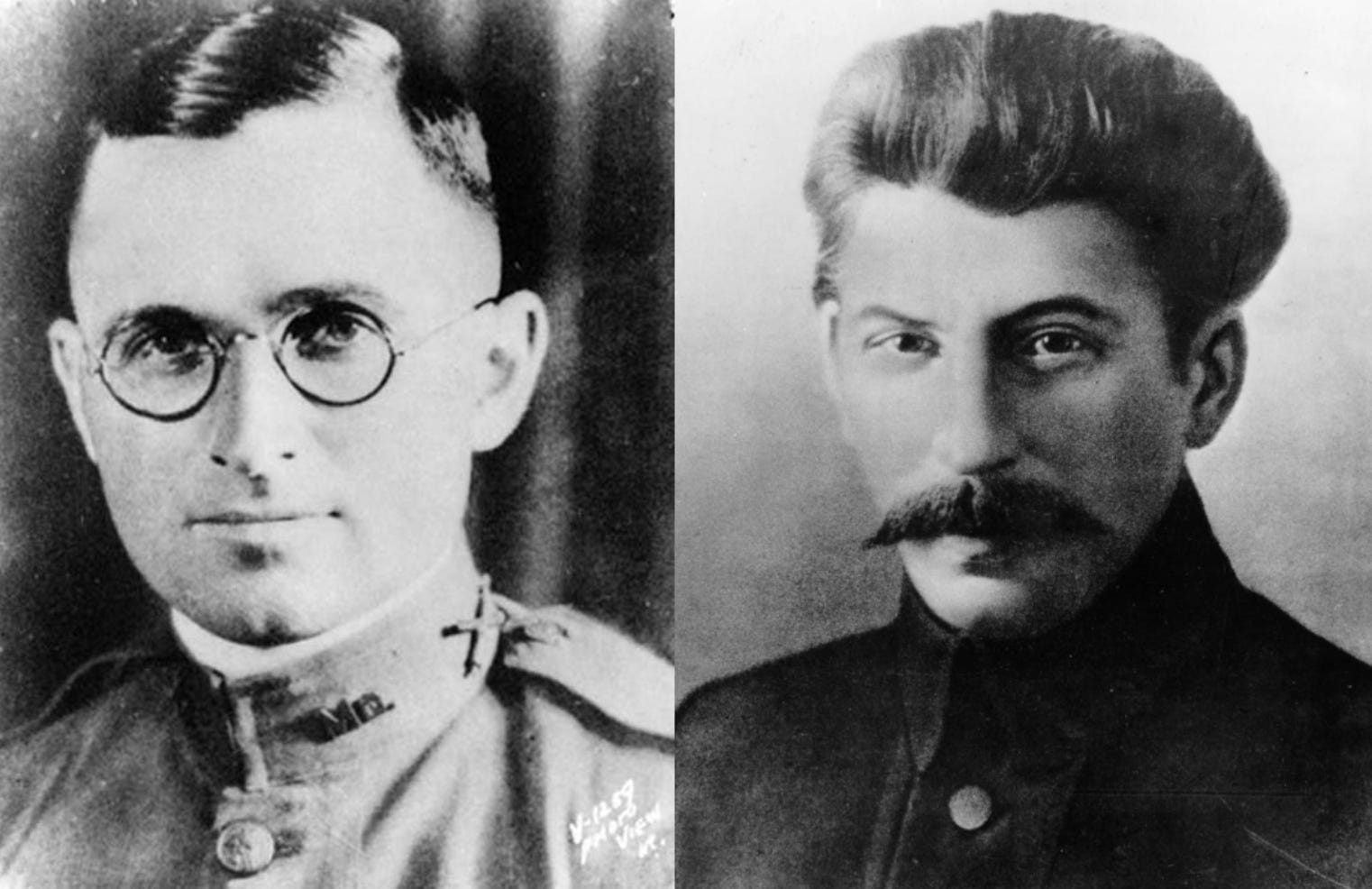
One was a salt-of-the-earth Midwestern haberdasher from Independence, Missouri, a devout Baptist and American internationalist who was a true believer in his country’s providential mission of advancing freedom and democracy around the globe.
The other was a revolutionary bandit from Gori, Georgia, in the southern periphery of the Russian Empire, who was a staunch Marxist-Leninist and an uncompromising practitioner of the Soviet Union’s imperial mission to export the ‘dictatorship of the proletariat’ around the world.
Despite their diametrically opposed backgrounds and worldviews, both Harry S. Truman and Joseph Stalin approached their geopolitical and ideological missions with cold pragmatism, managing to balance internationalist and expansionist aims with domestic realities of their respective systems—an open democratic society with a free market economy versus a closed totalitarian society with a centralised command economy.
This clash of irreconcilable systems was personified down to their very surnames: the literal ‘True Man’ of honest dealing and plainspoken democracy versus the self-fashioned ‘Man of Steel’, whose identity was forged in underground violence and built on ruthless discipline.
The dimensions and contours of this bipolar rivalry came to shape the long-term foreign policy doctrines of the U.S. and USSR during the Cold War (1945-1991) and thus determined the order of things in global politics for the subsequent decades.
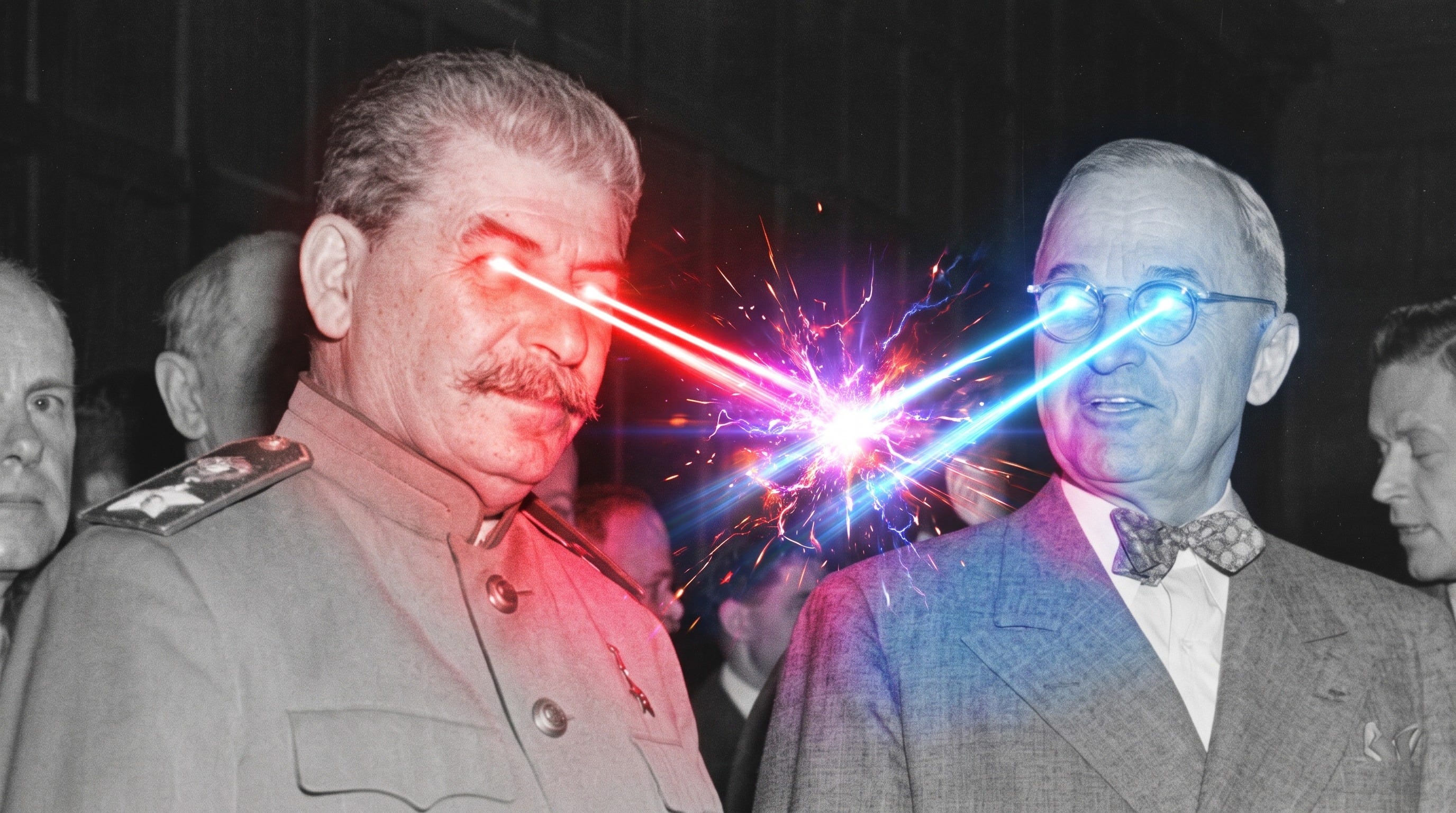
Exploring the relationship between these two historical figures requires examining the grey space between them, that is, the ideological, institutional, and geopolitical terrain within which the early Cold War was contested.
What this dynamic reveals is that, even though the moral and immoral, right and wrong, and good and evil appear to be worlds apart in abstract theory, the boundaries separating them in international politics are much narrower. Thus the pursuit of those things that are true, good, and just requires a far higher tolerance for moral ambiguity and tragic compromise than historical memory often admits.
The implication of this ‘greyness’ is that resolving civilisational competition and moral conflict is a slow, structural process stretched out over decades. To paraphrase Martin Luther King, the arc of history is long, but it bends toward justice.
The ultimate American triumph over the Soviet Union after a half-century struggle was precisely such a gradual resolution. I argue that the foundational architecture for that victory, and the world order that followed, was engineered by Harry Truman.
II. The Atomic Dawn
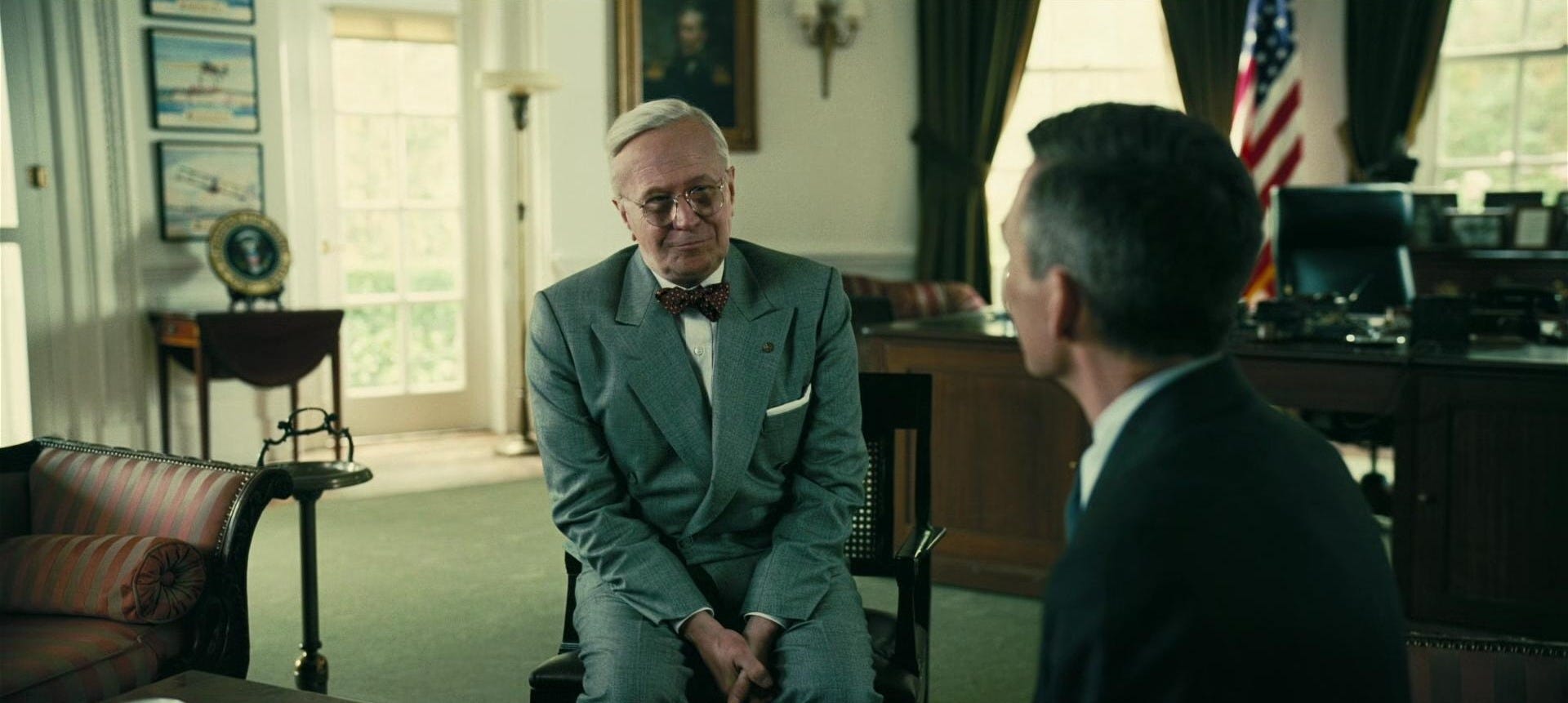
Gary Oldman’s brief yet memorable appearance as Truman in Christopher Nolan’s Oppenheimer (2023) brilliantly captures the ‘no nonsense’ attitude and unsentimental pragmatism of America’s thirty-third President. If you have not seen the film or don’t remember the one scene in which he appears, it goes like this:
J. Robert Oppenheimer (played by Cillian Murphy) visits Truman in the Oval Office shortly after the President made the decision to drop the atomic bombs that Oppenheimer developed on the Japanese cities of Hiroshima and Nagasaki in August 1945. Oppenheimer opens his heart and conveys his emotional turmoil to the President, telling him that he ‘feels that he has blood on his hands’.
Truman looks at Oppenheimer through his thick eyeglass lenses, takes out a handkerchief from his breast pocket and mockingly dangles it in front of the physicist’s face.
‘Do you think anyone in Hiroshima or Nagasaki gives a shit who built the bomb?’ Truman says. ‘They care who dropped it. I did. Hiroshima isn’t about you’. A stunned Oppenheimer is promptly escorted from the Oval Office just as we hear Truman tell his staff, ‘Don’t let that crybaby back in here’.
For best or for worst, the buck always stopped at Truman’s desk.
Perhaps this resolve stemmed from Truman’s grounded understanding of American power in 1945 and a clear vision for what was required to maintain it moving forward. At the close of World War II, the U.S. (the first-of-its-kind free and open society made up almost entirely of immigrants) had arrived as an unmatched economic and military titan.
Truman bore the burden of translating that raw power into an operational deterrent against his emerging Soviet rival, Joseph Stalin, whom he met for the first and last time at the Potsdam Conference in the summer of 1945, shortly following Allied victory over Hitler and Nazi Germany.
On 24 July 1945, just days after the Americans successfully tested the atomic bomb in New Mexico, Truman casually mentioned to Stalin that the U.S. possessed a ‘new weapon of unusual destructive force’. Although Truman noted in his diary that Stalin did not know what he was talking about, Soviet intelligence had kept Moscow well-informed about the Manhattan Project.
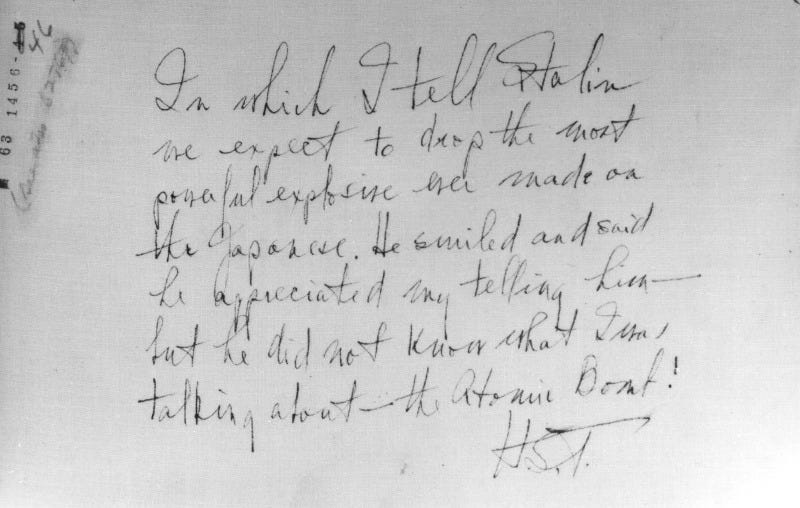
Less than three weeks later, Truman authorised the use of the Little Boy and Fat Man bombs against a tenacious and unrelenting Japan, compelling its unconditional surrender on 2 September 1945 and formally ending World War II.
The deployment of atomic weapons did not simply end a war; it altered the existential condition of international affairs. The world as we knew it until then was no more. We came face to face with our capacity for total self-obliteration. Humanity stepped into the atomic age.
The historical debate about the merits and virtues of Truman's decision to drop the bombs in August 1945 remains unresolved, but the fact that a nuclear weapon has never been used in international conflict since then plays in favour of his decision.
Is it possible that the decision was, in fact, a moral one?
Had he not done so, the Cold War would not have been ‘cold’. Without real knowledge of the destructiveness of nuclear weapons, both American and Soviet leaders would have been far more reckless and such near-catastrophes as the Cuban Missile Crisis would have indeed resulted in all-out nuclear war. In fact, no hot war between great powers has broken out since the bombings ended the Second World War, although proxy wars were plentiful (see Korea, Vietnam, Afghanistan, etc). There’s also the unpleasant math that showed a higher death count if the war with Japan continued versus the 200,000 people who died as a result of the bombings.
A haberdasher with a knack for accounting was someone who could do that sort of cold calculation.
While speculative counterfactuals are rarely the business of history, evaluating high-stakes political decisions demands confronting the grim alternatives. It remains an open question whether the same choice would have been made had Franklin Roosevelt not died in office. FDR had guided the nation through the depths of the Great Depression and the global war with an aristocratic, almost saintly aura, but it fell to his vice president to step into the presidency at the precise hour the unthinkable had to be authorised.
Those who observed Truman intimately remarked that he lived much closer to the devil than his predecessor. Yet it was precisely that proximity that granted him the ruthless clarity required to govern in an unforgiving world: he lived closer to the devil because he was tasked with fighting greater demons. When confronted with an adversary like Stalin, who measured power in sheer attrition and imperial subjugation, Truman proved capable of meeting cold realpolitik on its own terms, shouldering a tragic moral burden to ensure the survival of an open society.
III. The Red Man
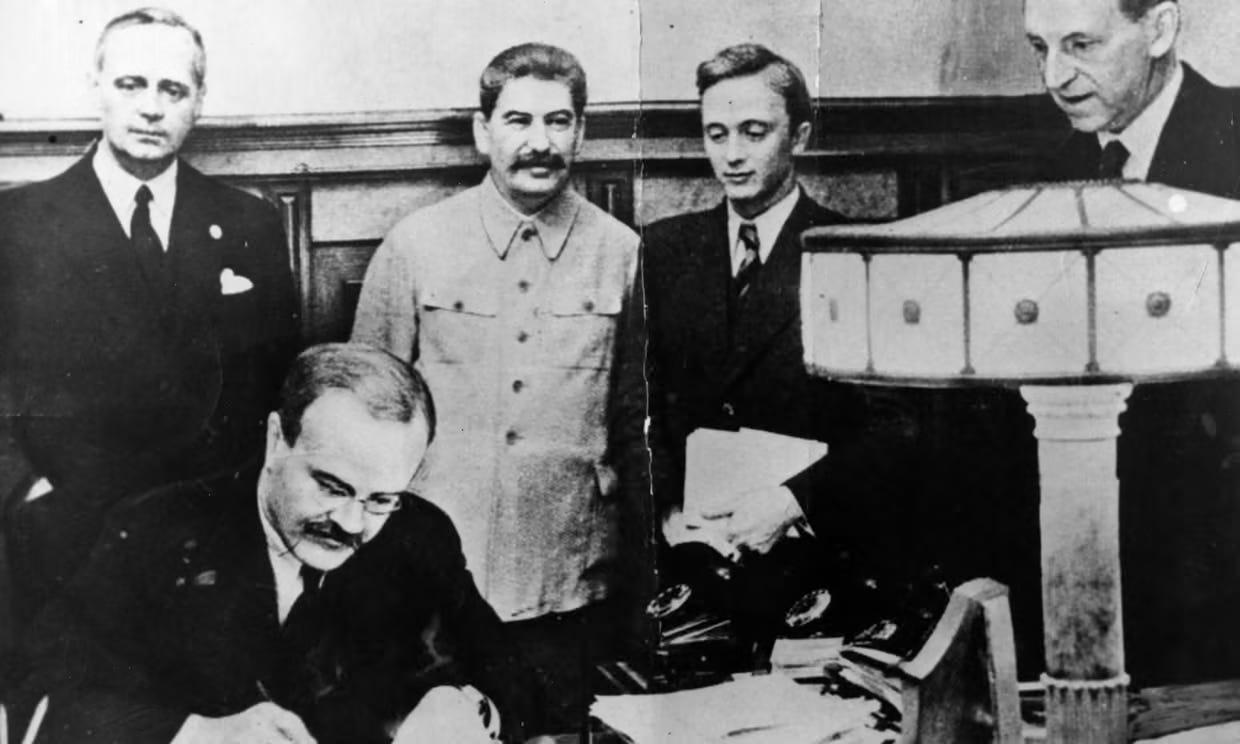
By the time they met in Potsdam in the summer of 1945, Joseph Stalin had already ruled over the Soviet hellscape for two decades. Truman had been U.S. President for three months. Regardless, he had observed everything that Stalin’s rule brought to the USSR: the collectivisation of agriculture that re-enslaved 100 million peasants and resulted in catastrophic famines, mass terror and repressions that murdered millions more, his collaboration with Nazi Germany in the dividing up of Eastern Europe in 1939, among all the other things.
Stalin was no less to blame than Hitler was for the outbreak of the War. Truman had no illusion that he was just as evil. So the two of them did not need to meet again. There was nothing they could resolve by talking.
Stalinism is less a name for an ideology and more a name for the system that organically resulted from the institutionalisation of Marxist-Leninist ideology through practice. Although some Marxist historians argue that Stalinism was a deviation or a corruption of the ideology, the fact is that Lenin’s version of Marxism created the framework for precisely someone like Stalin to take hold of the system that the ideology was directed toward establishing. Marxism-Leninism created an evil system because it attempted to replace God with the State and embody it through a single individual.
Rooted in the theory of Marxist historical materialism and class warfare, Lenin added the idea that a proletariat revolution could supersede the bourgeois-democratic phase in the Marxist teleology while also embedding the cult of the leader at the core of the Party and the state apparatus. Within the chaotic context of Russian Imperial collapse amidst the losses endured in the First World War, Lenin’s chimerical ideological structure proved to be a potent means for spontaneously mobilising workers, peasants, and soldiers toward a communist revolution.
However, for all the unique quirks of this new ideology, its underlying mission remained the same as it had in other periods of Russian history, that is, the dual (and mostly incompatible) objectives of overcoming Russia’s economic backwardness while also retaining the hyper-centralised authority of the State.
Russian history has repeatedly seen aggressive top-down efforts to import modernisation from Europe without making concessions to the values of democracy, free markets, and open society that actually created the conditions for those successes. This meant that Russia’s spontaneous leap to becoming a modern country would have to be achieved through sheer force of will and the population would have to be violently dragged through the process.
Thus, rapid industrialisation was pursued by means of mass imprisonment and coercive prison labor, the collectivisation of agriculture was pursued by killing the kulaks (land-owning peasants) and seizing their land, and the consolidation of the State’s power was pursued through extensive purges, repressions, and murders.
But as brutal and amoral as all of this was, the fact remains that, by 1945, the Soviet Union (after enduring an unprecedented loss in human life) had ultimately defeated Hitler’s Germany and emerged as one of two great powers on the world stage, less than three decades after the Russian Empire’s spectacular collapse in 1917 and its apocalyptic civil war.
This is the reason that, for so many people, Stalin’s historical reputation remains more ambiguous compared to Hitler’s for example, even if the severity of his crimes against humanity were equivalent to, if not greater than those of Hitler. Because Stalin was among the victors of the War, the ends appeared to justify the means.
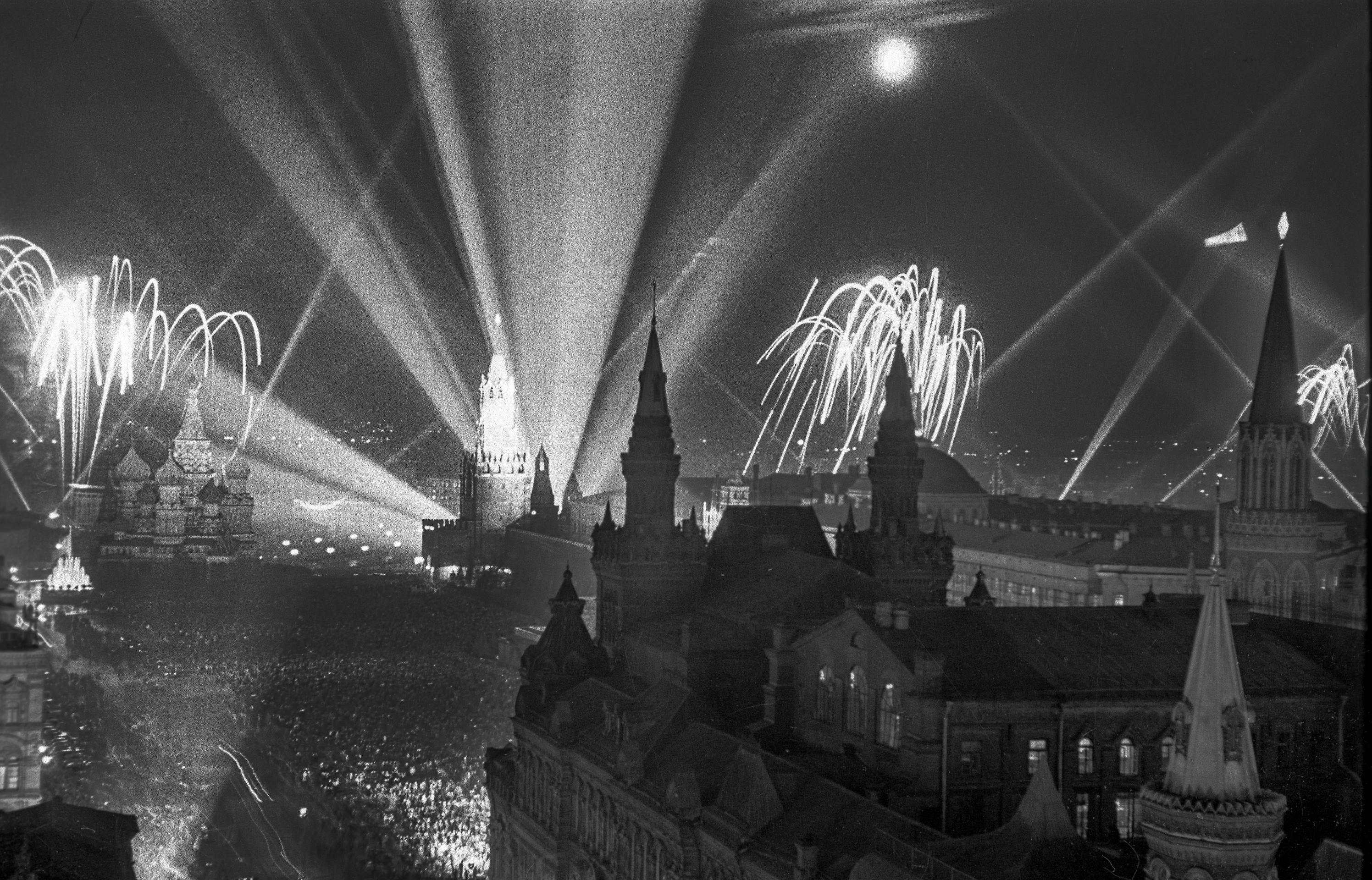
Stalin’s ‘victorious’ legacy is the main element explaining the persistence of his long shadow in Russia to this today. While the ideological apparatus of Marxism-Leninism evaporated with the collapse of the USSR in 1991, the institutional and psychological machinery of Stalinism was never purged. Unlike postwar Germany, which was subjected to the Nuremberg trials and forced through an exhaustive moral reckoning, Russia never put the Soviet state’s crimes against humanity on trial.
By canonising the 1945 victory, the Russian state preserved the core premise of Stalinist governance: the conviction that individual human lives are merely expendable cogs in an imperial machine, and that paranoia, external enemies, and iron-fisted autocracy are the only things keeping the motherland from collapse.
IV. The Truman Order
Where Stalin’s closed system relied on the whims of a single despot, Truman’s proved the resilience of American open society through a remarkable capacity for institutional intellect. Where Stalin murdered the people whom he perceived as intellectual threats, Truman had the humility to empower brilliant strategic thinkers around him. These were people like George F. Kennan, George C. Marshall and Dean Acheson, who made up his inner circle and helped formulate an actionable grand strategy that guided U.S. foreign policy throughout the Cold War.
With their input, the Truman administration established the economic, diplomatic, military, and intelligence pillars of the free world, erecting enduring structures that defined the Western alliance and effectively contained Soviet expansionism for decades.
Its main pillars include:
Bretton Woods: Conceived under FDR in 1944, Truman signed the Bretton Woods Agreements Act into law in the summer of 1945, anchoring the non-communist world to the U.S. dollar through the International Monetary Fund and the World Bank. When the year-end deadline arrived in December 1945, Stalin refused to ratify the agreement as it would dismantle his command economy. This marked the foundational economic divorce ahead of the Cold War.
The United Nations: Chartered in San Francisco in June 1945 and permanently anchored in New York City, the UN codified the principles of national sovereignty, multilateral diplomacy and collective arbitration.
The Marshall Plan: Initiated in 1948, the European Recovery Program infused over $13 billion into Western Europe, rehabilitating the continent’s devastated economy while binding allies to open market principles and inoculating them against communist subversion.
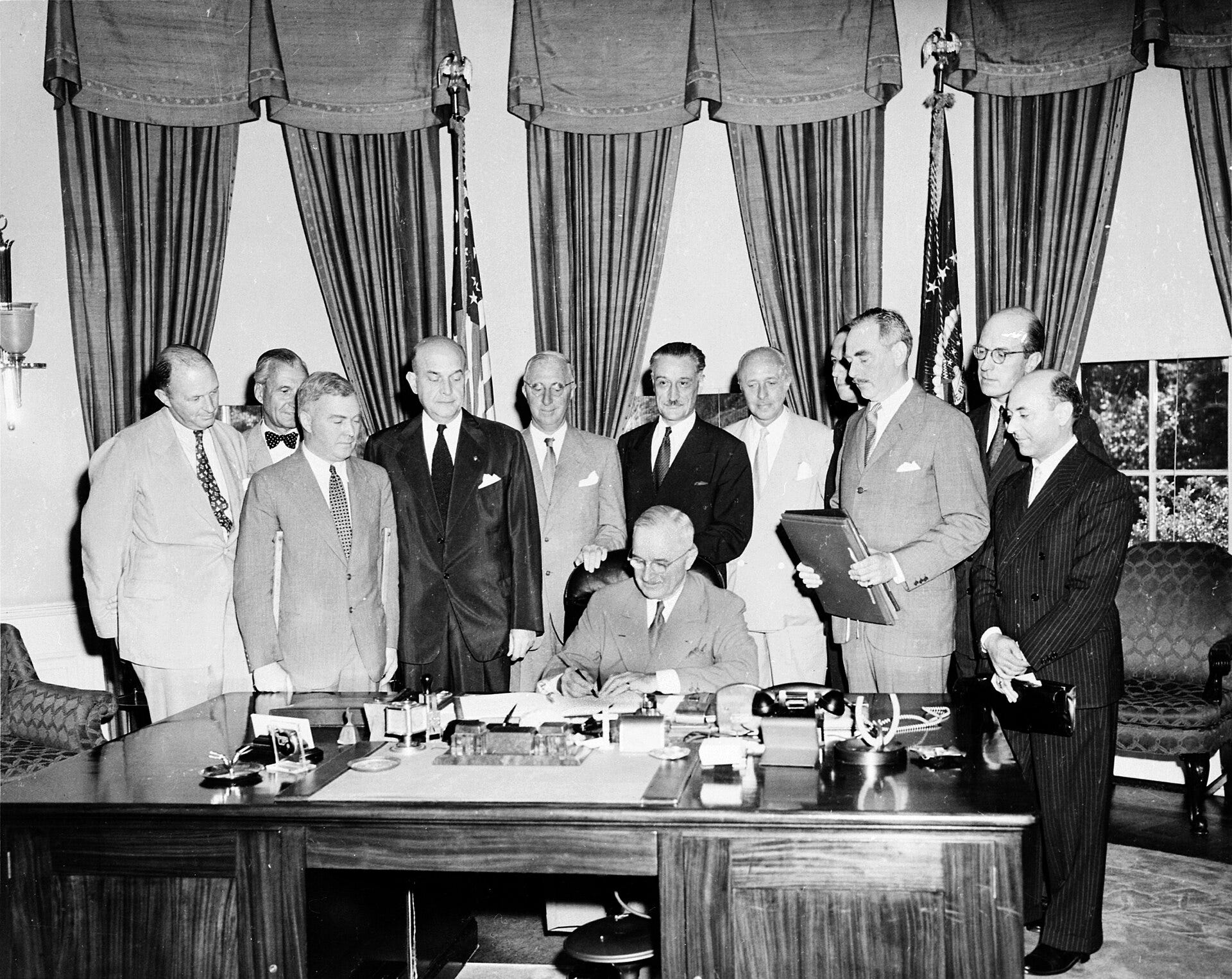
NATO: Signed in 1949, the North Atlantic Treaty established an ironclad mutual defence pact under Article 5 and thus created the most powerful collective security organisation in history.
The modern security state: Codified through the National Security Act of 1947, Truman established the Department of Defence, the Central Intelligence Agency (CIA) and the National Security Council (NSC).
Anti-Soviet anchors in the South: Through the Truman Doctrine, Washington shored up Greece and Turkey, turning back a communist insurgency and denying Stalin control over the Turkish Straits and access to warm waters. Truman reinforced the Eurasian rimland in 1948 by immediately recognising the newly-established State of Israel, anchoring an indispensable Western foothold at the crossroads of the Middle East.
Yet maintaining this new architecture proved neither cheap nor purely peaceful. For Truman, navigating the ‘grey space’ between him and Stalin was never confined to high-minded institutionalism and diplomatic manoeuvring. It was stained with blood in countries like Korea.
When Stalin green-lit Kim Il Sung’s invasion of South Korea in June 1950, Truman bypassed a formal congressional declaration of war to commit American forces under a UN mandate, setting the precedent for the modern national security presidency. The brutal three-year conflict in Korea claimed millions of lives and exposed the paradox of Truman’s containment: to prevent a direct, civilisation-ending nuclear confrontation between great powers, the rivalry had to be fought through brutal, localised proxy wars.
For Truman, the strains of sustaining this global posture also exacted a bitter price domestically, as his presidency became overshadowed by the rise of McCarthyism and the witch-hunts against suspected communist sympathisers, not to mention the persistence of racial segregation in the South. McCarthyism was a cynical and aggressive escalation of the political climate fostered by Truman’s own Executive Order 9835, which created a federal loyalty program intended to preempt Republican charges of weakness against the Democrat president. However, it ultimately fed the very paranoia it was designed to neutralise.
Even with these profound domestic and international compromises, Truman’s architecture succeeded. His administration built a global system of alliances grounded in mutual self-interest, collective deterrence, and open enterprise. It is an institutional framework that has outlasted the Soviet Union, one that remains the operating system of the Western world, and a fortress for open societies to this very day.
V. Unravelling, Revanchism, and Truman’s Order Today
In another stroke of historical symmetry, both Truman and Stalin exited the world stage in 1953. Truman, having declined to seek reelection, vacated the Oval Office in January and returned quietly by train to Missouri as a private citizen, while Stalin died two months later on the floor of his dacha, surrounded by men too terrified to call a doctor. The divergence that followed further revealed the contrast between their systems. Stalin’s empire began a four-decade descent into structural rot and eventual collapse, while Truman’s institutional architecture carried the West to victory in 1991.
This brings us full circle to the endgame of the struggle. As I argued in my examination of the Reagan–Gorbachev summits (read here), the end of the Cold War was the crowning triumph of Western foreign policy strategy, coercive diplomacy, democratic politics, and open markets. Yet the settlements of 1991 carried the same fatal flaw as the 1919 Versailles peace settlement that followed Imperial Germany’s loss in the First World War: both failed to durably integrate the defeated empire into the victors’ order, cultivating fertile ground for imperial revanchism.
Just as the territorial losses of 1919 birthed Adolf Hitler’s quest to overturn Versailles through blood and conquest, Russia in 1917 had also suffered its own catastrophic defeat in the First World War, experienced imperial collapse, a Communist revolution, and the loss of its western borderlands. But where Hitler’s revanchist gamble ended in total ruin in 1945, Joseph Stalin succeeded. The ‘Man of Steel’ not only reclaimed the lost imperial perimeter of the tsars but expanded it deep into the heart of Central Europe.
The collapse of 1991 also triggered this historical pattern. A Russia humiliated by the sudden dissolution of its Soviet empire embraced Vladimir Putin, a modern revanchist determined to avenge that defeat, reclaim Moscow’s sphere of influence, and reestablish itself as a great power. Yet because Truman’s atomic taboo still enforces its discipline, this confrontation has avoided global thermonuclear ruin. Instead, the world has long crossed the threshold into a Second Cold War.
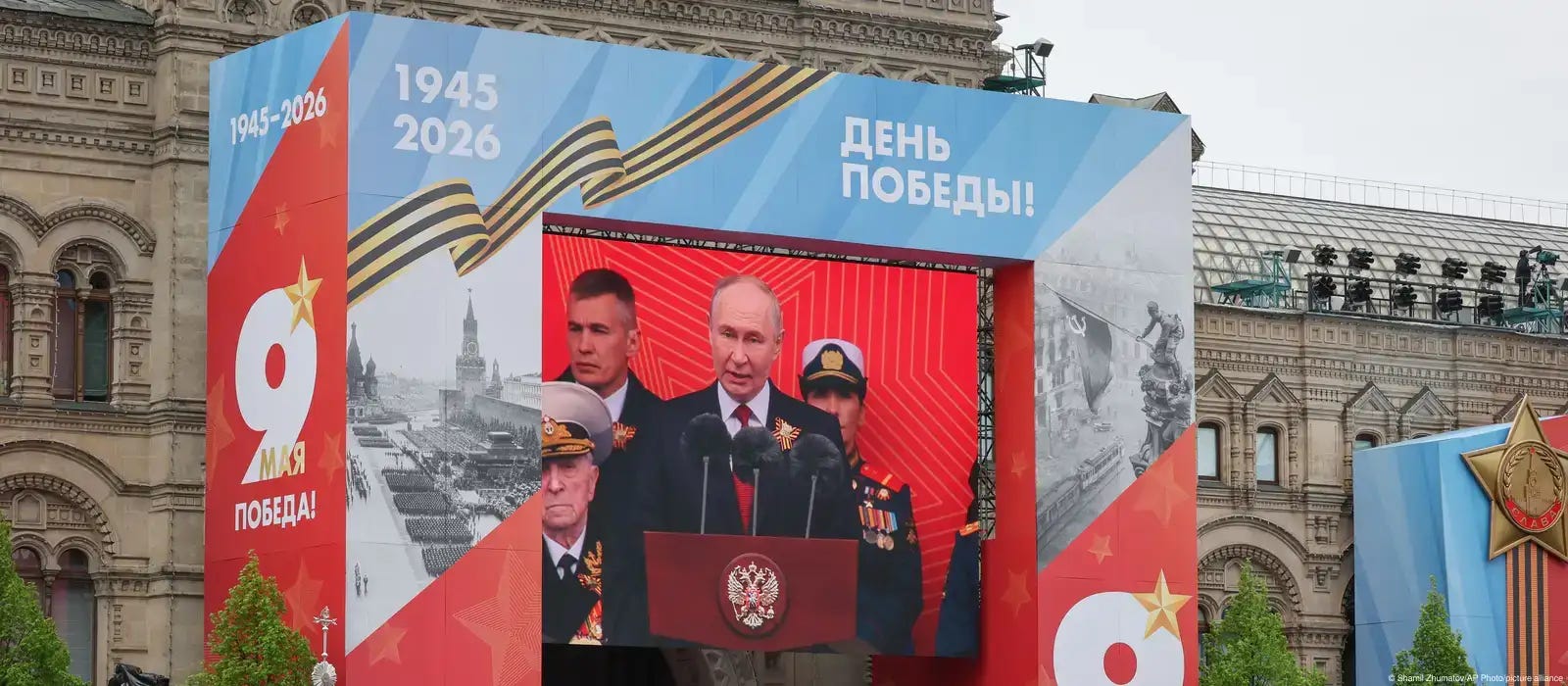
What makes this second contest far more dangerous than the first is that the terrain is infinitely more complex and greyer. The Cold War of Truman and Stalin was an ideological duel fought across a largely binary map. Today’s struggle is multipolar, fluid, and relentlessly oscillating: economic interdependencies blur moral allegiances, and the boundaries between war, peace, deterrence, and coercion shift by the week.
Worse, while Putin attacks the West’s institutional fortress from without, the architecture is being actively sabotaged from within. The rise of Donald Trump’s MAGA foreign policy doctrine—reducing NATO's Article 5 to a conditional protection racket—directly mirrors the ascendance of pro-Russian, right-wing populist parties across Europe. By trading durable collective security for insular nationalist vanity, these factions validate Putin’s core wager: that open societies are decadent, short-sighted, and lack the political stamina to defend their own institutions.
Navigating this ambiguous and fractured landscape requires leaders with a rare ability for synthesis and integration, leaders who possess an unyielding moral compass regarding what an open society represents, combined with the cold, ruthless pragmatism required to survive in an unforgiving world.
It demands precisely the kind of statecraft Harry Truman embodied: someone who refused to retreat into self-righteous isolation, understood the tragic compromises inherent to international power, and possessed the stomach to stare down autocrats in the grey space where the global order is actually decided.
The eighty-year absence of great-power war was not a historic inevitability. It was an actively maintained fortification constructed by a Missouri haberdasher who understood that free nations cannot survive on moral platitudes. If Western powers abandon the collective alliances and deterrence structures Truman codified, they will not escape into tranquil isolation. They will simply surrender this fragile, oscillating world to the revanchist heirs of Stalin.